
Innovation & Technology
|
 Or |
Common Technology Questions
- Printing
- Internet Troubleshooting
- Windows PC (Classroom PC, Laptops, Desktops)
- Google Accounts and Devices
Printing
I’m hitting print, but nothing shows up at the copier. What should I do?
When this happens, sometimes a restart of your PC will fix the issue. Once you restart, try printing your document once more. If a program called “Papercut” pops up, asking for your login information, you may enter your credentials here. The "Sign in with Google" button will automatically sign you into your account. Papercut is the program that we use to facilitate printing with our copiers.
When I go to print, no printers are listed!
This happens when your computer fails to grab the printers from our policy. This can usually be fixed by restarting your PC, or by performing Windows updates (followed by a restart!)
Internet Troubleshooting
Checking your Internet connection
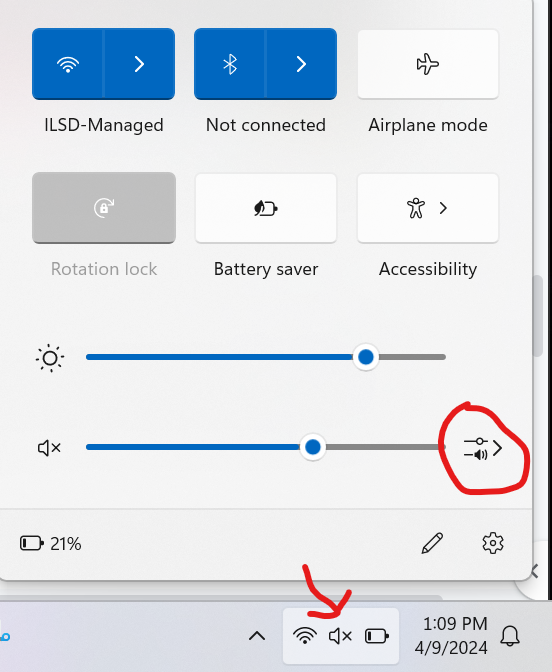
If your internet connection doesn’t seem to be working correctly, you can check which network you are connected (or not connected) to by going to the bottom right corner of your screen.
If you see a “globe”, that means that you are not connected to any network.
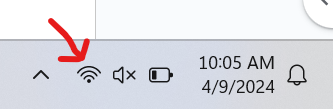
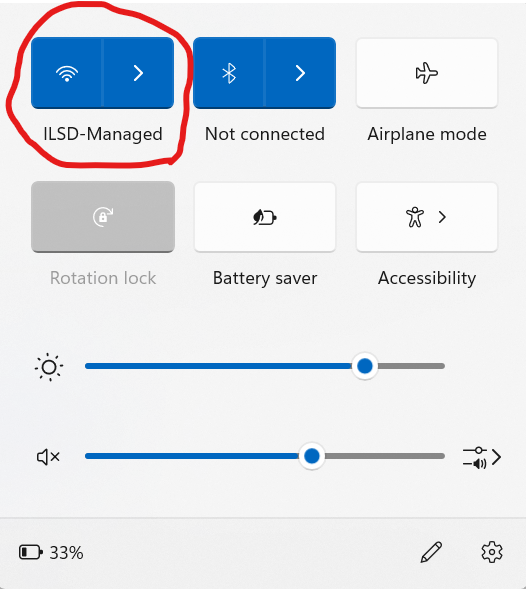
In this menu, circled in red, you can select a network to connect to. If you are on an ILSD owned Windows device, you should be able to connect to ILSD-Managed.
Windows PC (Classroom PC, Laptops, Desktops)
Shutdown VS restarting your PC:
Powering down your computer is different from restarting your computer.
To restart your computer, instead of hitting the power button on your laptop itself, go to the bottom left corner of your screen and click the “Windows” button.
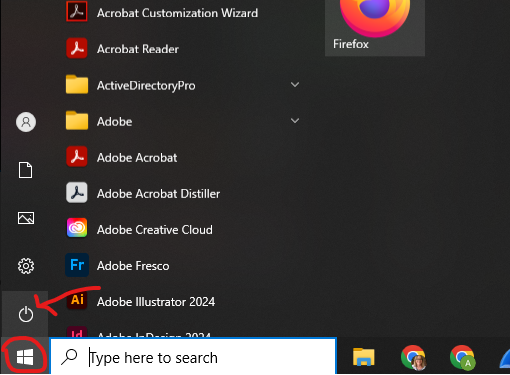
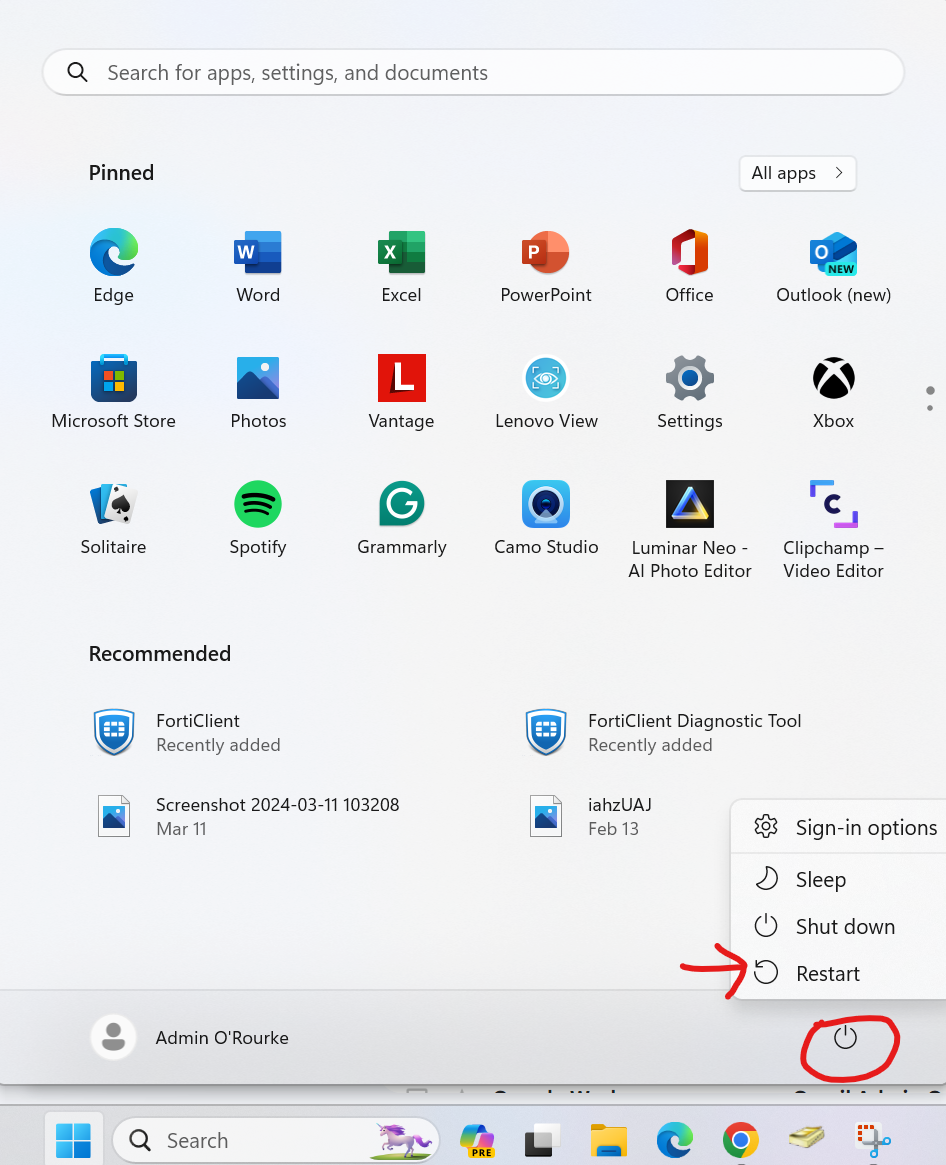
Depending on which version of Windows your device is running, your screen may look different. You are looking for the power button icon which will be in the menu that appears once you have clicked the Windows button. From here, click the power icon, and then “restart”. It is good practice to do this at least once a week!
When you shut down your computer, it holds on to a lot of data that is used to help speed up the startup process. A restart will clear this data, and helps ensure that the computer installs updates. Without restarting your computer, it cannot clear this and it can cause the PC to become slow over time.
Laptop won’t start up (black screen):
Sometimes the Windows laptops have a hard time starting up. They may appear “powered on”, for example the cooling fans will be running, but nothing shows on the screen. This can be solved by:
- Hold the power button for 30 seconds to one minute.
- Make sure the laptop fans are not spinning by listening for the sound.
- Press the power button once and let the laptop start up.
This can sometimes bring it out of that black screen state. If this doesn’t work, please contact us at helpdesk@interlakes.org, and we would be happy to assist you.
Windows Updates:
Windows frequently pushes out updates which sometimes do not automatically install to your computer. You can install these updates yourself! To do this:
- Click on the Windows button in the bottom left corner of your screen, then, the “gear” for settings.
- Navigate to the “Windows Update” section of the settings app.
- From here, you can click “Check online for updates” which will communicate with Microsoft servers to see if you are missing any updates.
- Once those updates download fully, you can restart your computer. If you need assistance please contact the Technology Team and we would be happy to help with this process.
- If for some reason your updates are failing, or if you would like assistance with this process, please contact a Technology team member and we would be glad to take a look at your device.
Switching audio output:
You may want to show a video or presentation, but, how do you use the speakers your brought in, or maybe the speakers in the Newline board that is in your classroom?
If you want to switch audio outputs, you can easily do so! To do this:
- Click on the little speaker in the bottom right corner of your screen. You will see a volume bar. Depending on your version of Windows it may look slightly different.
- Next to, or above, your volume bar you will see a button that brings you to a drop down menu.
- Here, you can select which device you would like your audio to come out of, for example “Speakers (Realtek)” would likely be the built in speakers in your PC. you can switch between these however you like to experiment and test your sound.
My program is frozen. How can I end the program so I can try again? (Task Manager)
Sometimes when using a program, it can freeze and get locked up. You are able to stop this program without restarting your entire computer. To do this:
- Press the button combo “ctrl, alt, and delete (del)” and you should see a blue menu appear with several options.
- Select “Task Manager”. This will start up a program called Task Manager that can shut down the program that is giving you trouble.
- Once you have opened Task Manager, find the program that you would like to shut down in the list.
- Right click the program and select “End Task”. You should see the program close, sometimes after a moment or two.
- Then you can restart the program so that you can do what you set out to do. Sometimes Task Manager doesn’t work, and if this is the case, a restart of your computer may be necessary. Please contact a Technology Team member if you are running into serious roadblocks with any application.
Multiple Monitors (Windows P)
You may want to display your computer with more than one display, for example, connecting your laptop to a TV or Newline board.
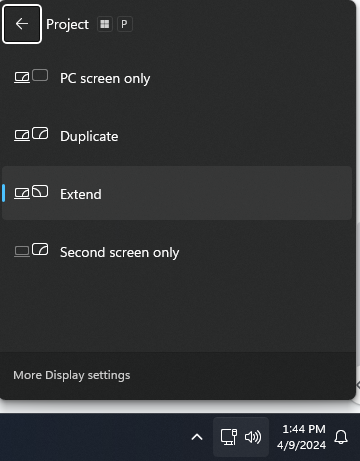
- To change how your PC is displayed on an external display, you can press the keyboard buttons “Windows + P”. The Windows button on your keyboard usually has a “Window pane” icon on the button itself, just like the button in the bottom left corner of your screen. Alternatively it may be labeled “FN” for the function key.
- When “Windows + P” is pressed, you will see a menu pop up like the one shown below. Here, you can select how you would like to display your PC.
- “Duplicate” will show the same image on both screens.
- “Extend” will set up a longer collage of screens, allowing you to effectively have a “longer” desktop and workspace.
- Extend is used when you have multiple monitors that are all being used at once. To present something, you would more than likely use Duplicate.
Google Accounts and Devices
Setting up Multi-Factor authentication for your Google (Inter-Lakes) Account:
If you are a new staff member who is setting up their Inter-Lakes Google Account, first, welcome! You will need to enable Multi-Factor Authentication for your account to function correctly. Our user accounts have a 7 day grace period before your account will be locked if Multi-Factor Authentication is not enabled. Multi-Factor Authentication can also be referred to as 2-Step Verification.
- To enable Multi-Factor Authentication, first, sign into your Google account.
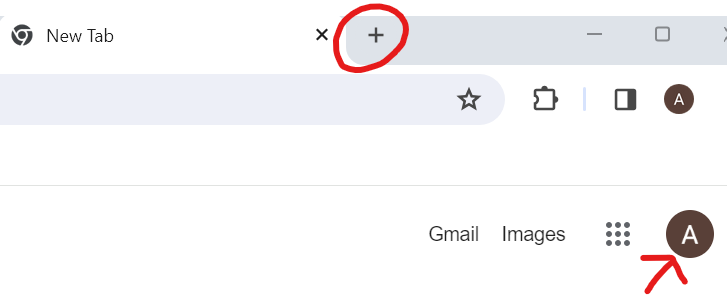
- Once you have signed into your Google account, open up a new tab in your browser. This will bring you to your homepage.
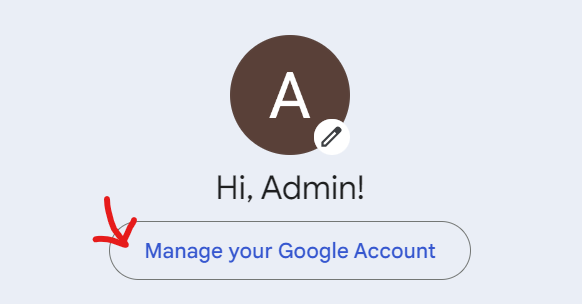
- On this page, navigate to the top right of your screen, where you should see an icon with your initials. Click on this icon, then, "manage account".
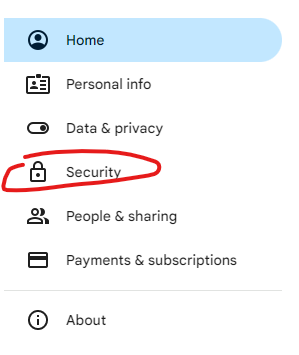
- You will see menu options listed on the left side of your screen. Click "Security".
- From the Security settings page, scroll down until you see "How to Sign into Google: Two Factor Authentication".
- Once you click on "2-Step Verification", you can choose how you would like to verify your identity. We recommend using the text messaging feature.
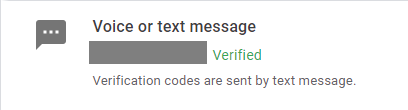
- Once you have confirmed your phone number or method of choice, you have completed the setup for Multi-Factor Authentication. To verify that this setup is complete, you should see your cell number listed. You can also try logging into a new device to make sure the prompts come through to your cell phone.
- If at any point in the process you are locked out of your account or need assistance, please contact the Technology Team and we would be happy to assist you!

The Team
|
Mark Parsons
Director of Technology mark.parsons@interlakes.org
Patty Coes James O'Rourke Connor Raposo
|
|
Technology is not about "acceptable use", it is about RESPONSIBLE use. Learn more about our Responsible Use Expectations which form the basis of our philosophy of how technology can and should be used in our district. |
|
 |